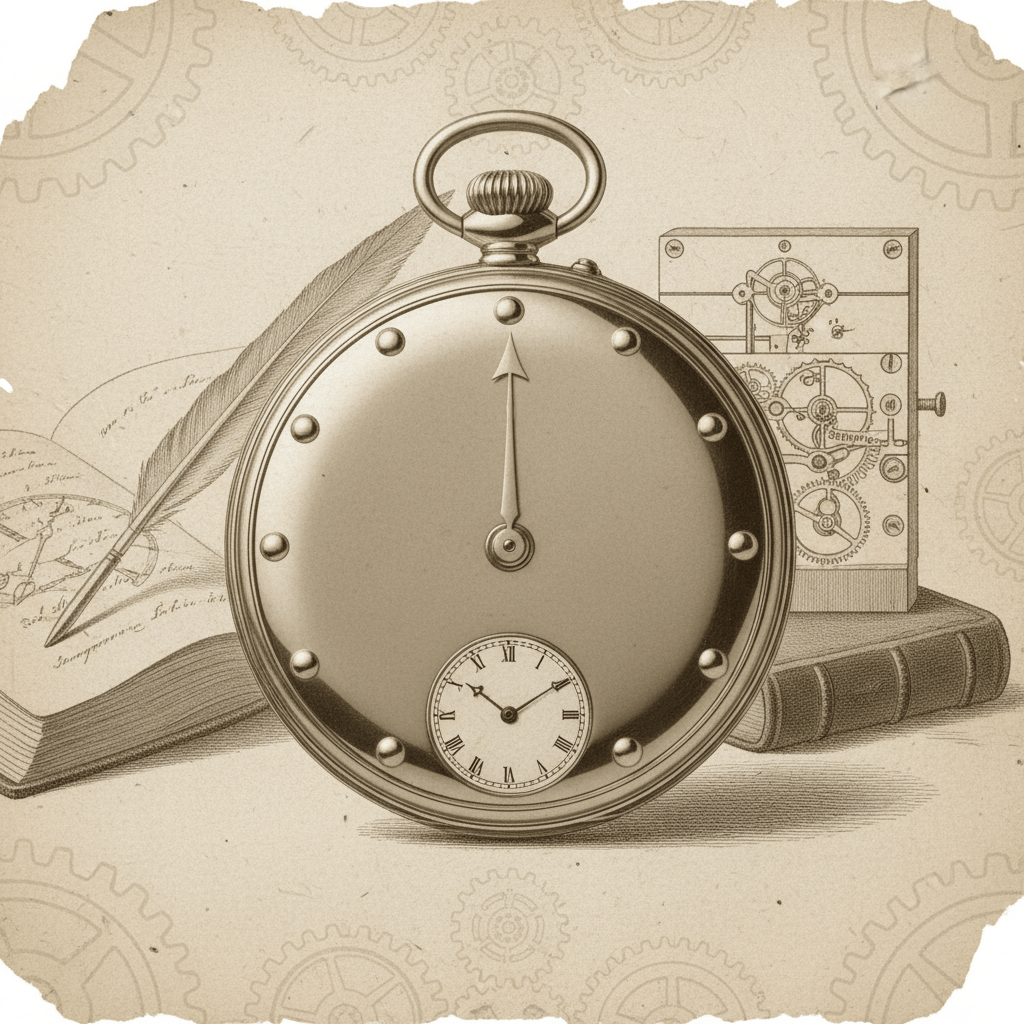
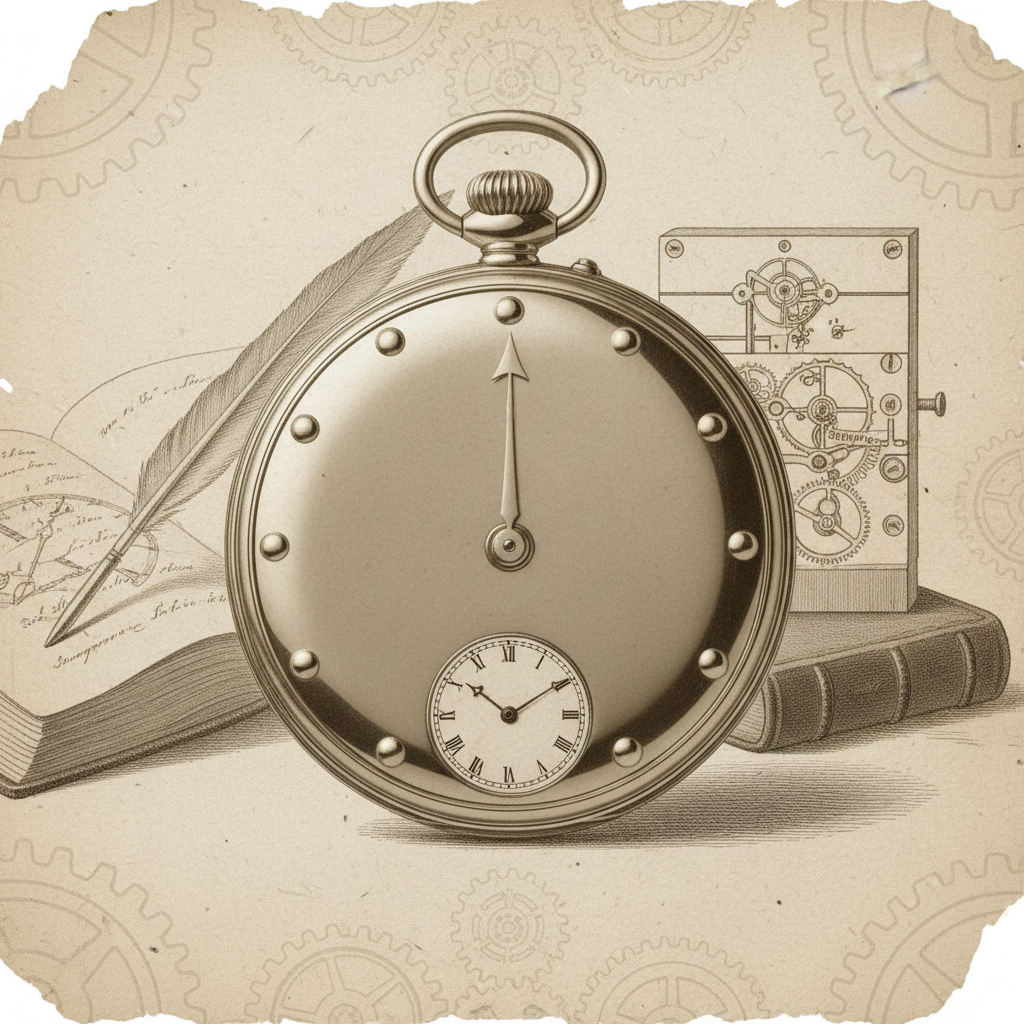
Long before digital displays or accessibility features, Abraham-Louis Breguet invented ‘montres à tact’ or tact watches in the late 1790s, featuring an external
📅 Wednesday, October 21, 2026
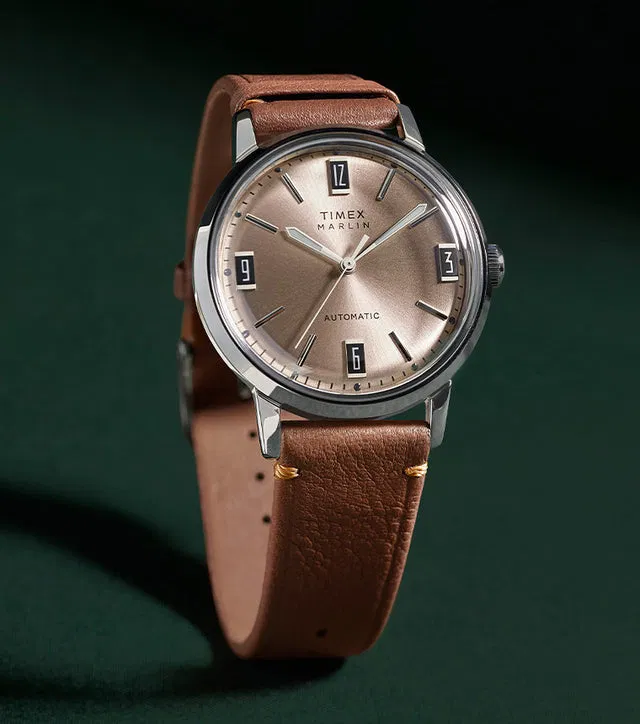
Long before digital displays or accessibility features, Abraham-Louis Breguet invented ‘montres à tact’ or tact watches in the late 1790s, featuring an external pointer on the case so wearers could tell the time discreetly in the dark or during polite company simply by feeling it. Instead of checking the dial visually, a blind person or a discreet gentleman could trace the position of the arrow relative to raised studs on the case rim to find the hour and minutes with remarkable precision.
Category: Watch History
Disclaimer: Every effort has been made to keep these watch facts accurate, but the world of horology is full of myths, disputed stories, and fascinating trivia. Consider these facts a starting point for discovery rather than the final word. If you have corrections or additional insights, let us know—we’re always happy to keep the record ticking in the right direction.
In the late 1800s, specialized marine pocket watches were developed with tide-predicting complications for naval navigators. These intricate mechanisms factored
📅 Tuesday, October 20, 2026
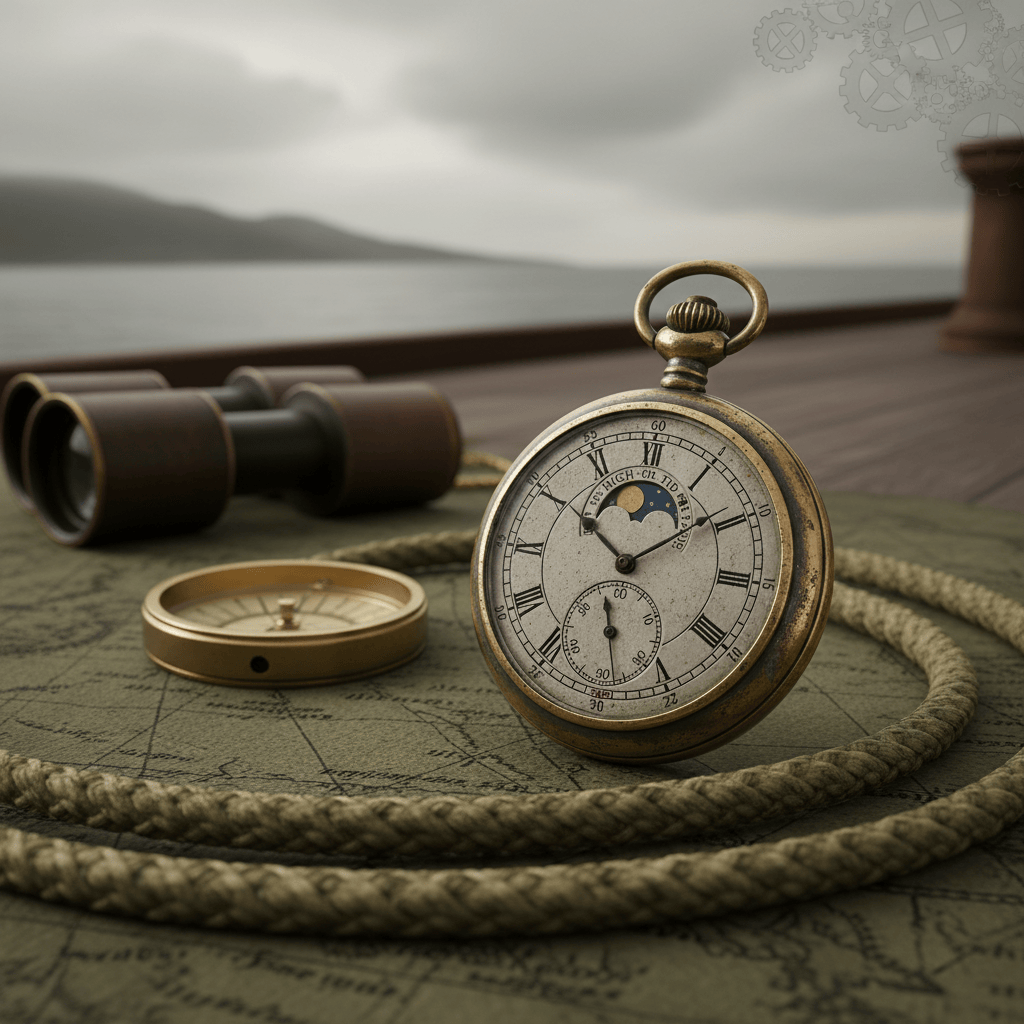
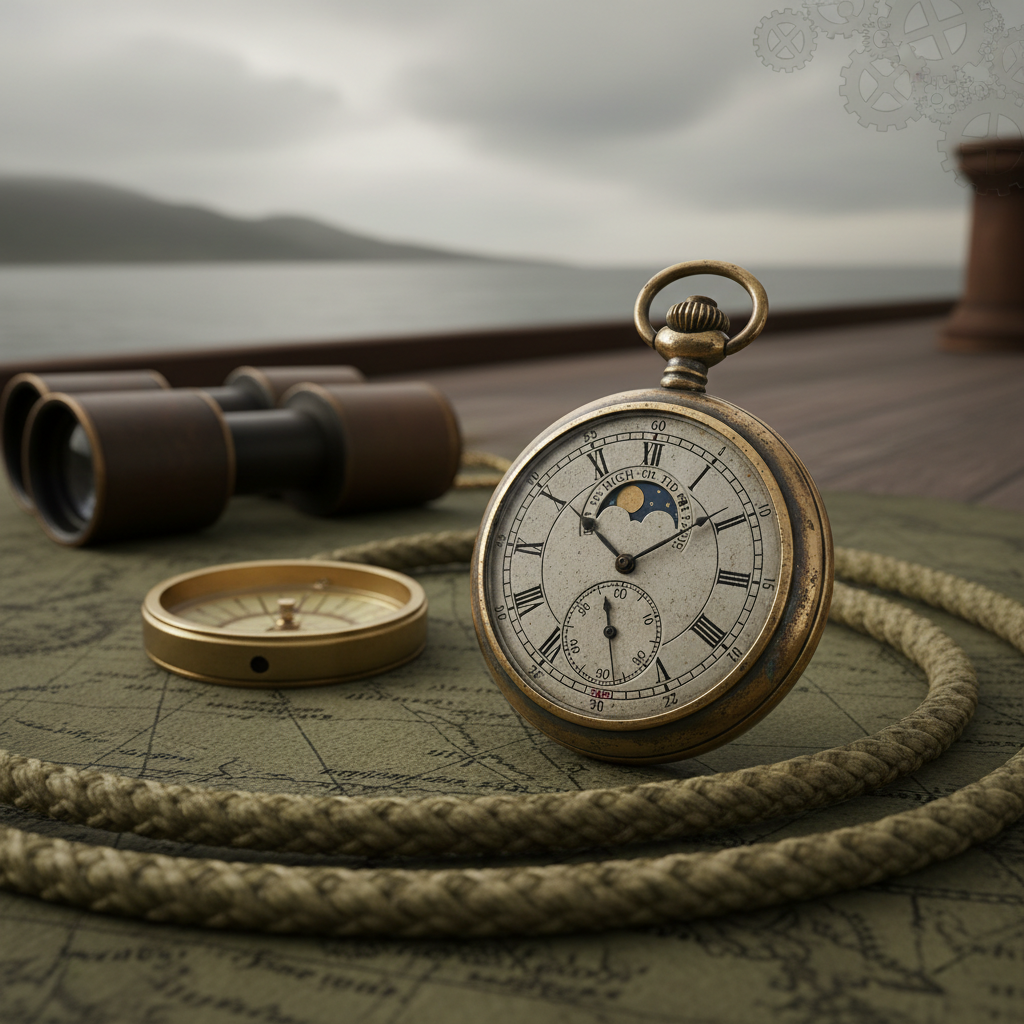
In the late 1800s, specialized marine pocket watches were developed with tide-predicting complications for naval navigators. These intricate mechanisms factored in lunar cycles to display high and low tides directly on the dial. This gave captains crucial advantages when navigating shallow coastal waters and treacherous ports.
Category: Military Watches
Disclaimer: Every effort has been made to keep these watch facts accurate, but the world of horology is full of myths, disputed stories, and fascinating trivia. Consider these facts a starting point for discovery rather than the final word. If you have corrections or additional insights, let us know—we’re always happy to keep the record ticking in the right direction.
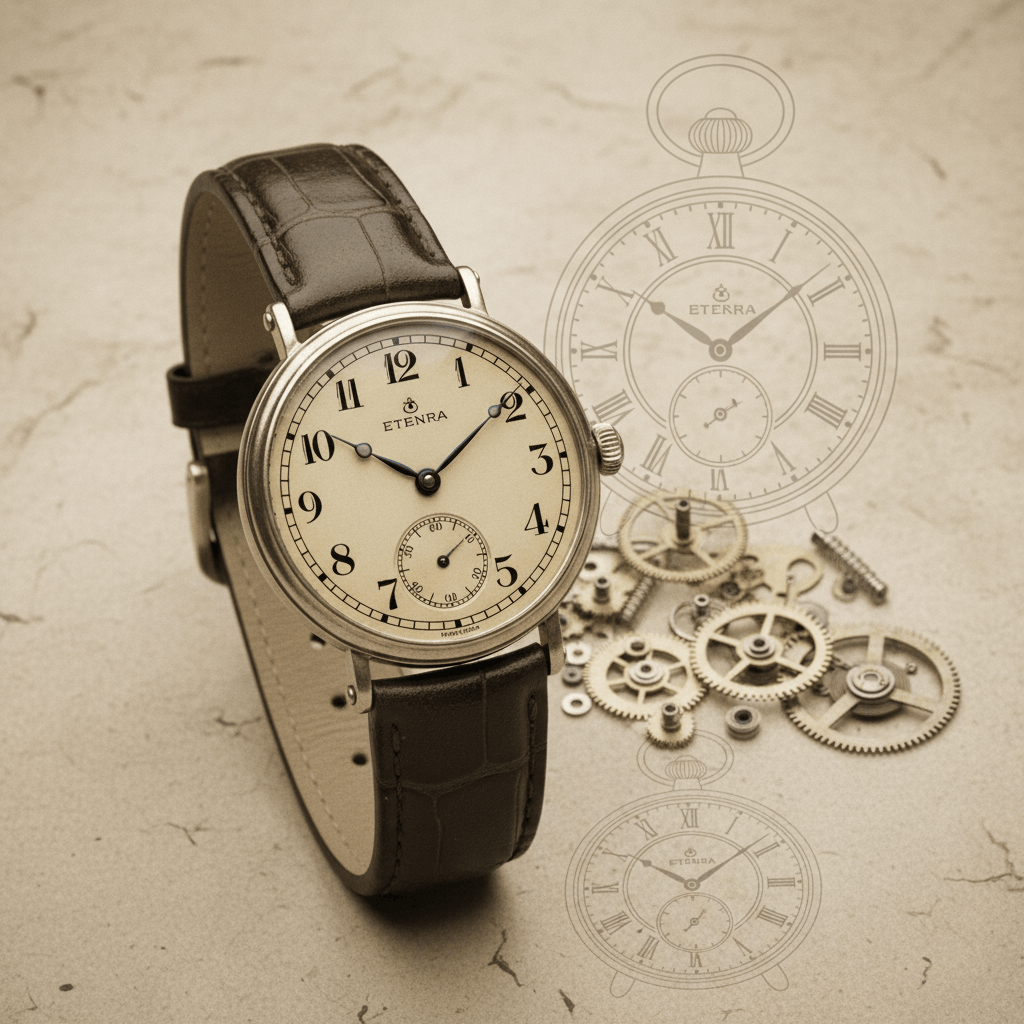
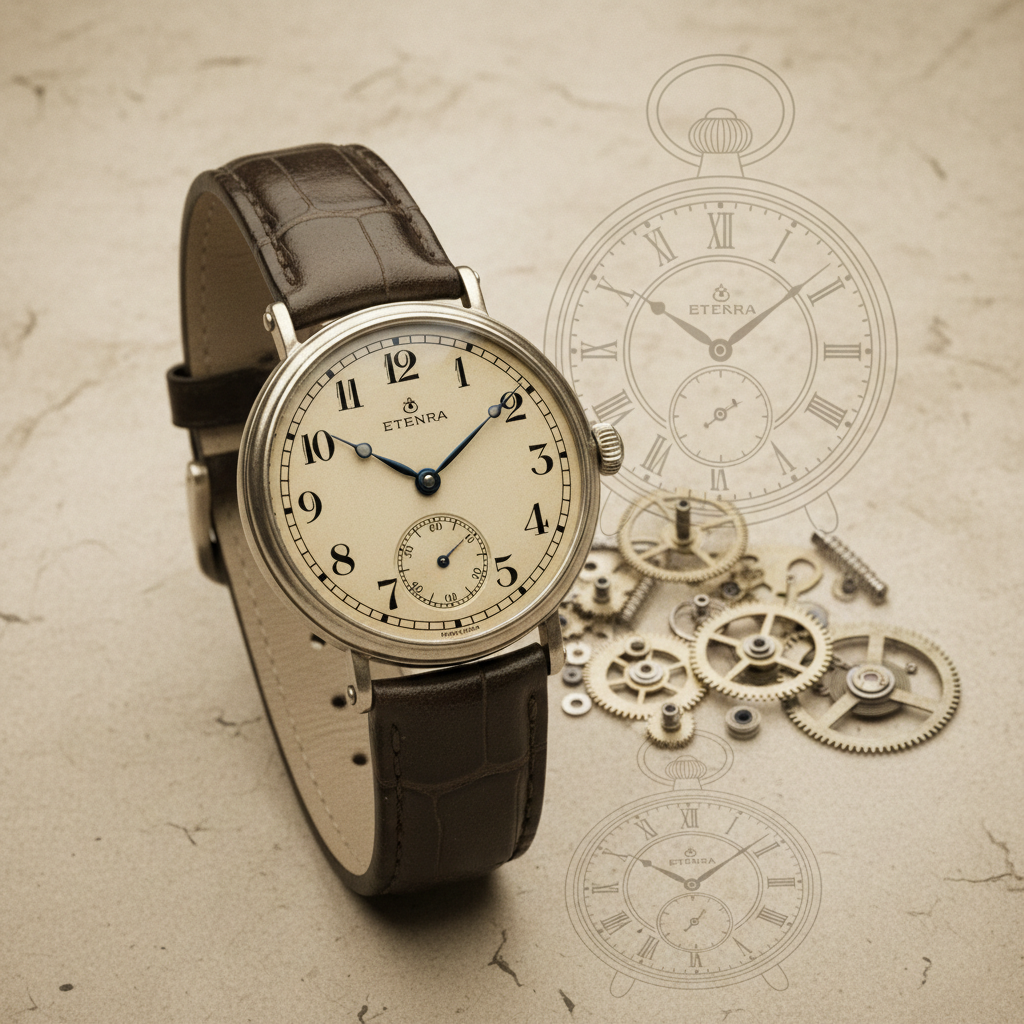
While mechanical alarm complications existed in pocket watches for centuries, shrinking the mechanism into a wristwatch proved exceptionally difficult. In 1914,
📅 Monday, October 19, 2026
While mechanical alarm complications existed in pocket watches for centuries, shrinking the mechanism into a wristwatch proved exceptionally difficult. In 1914, Swiss watchmaker Eterna solved this spatial puzzle by launching the world’s first production alarm wristwatch, utilizing a patent filed years prior. Because it relied on a single tiny mainspring to power both the timekeeping and the chime, the alarm could only sound for a brief six seconds.
Category: Watch History
Disclaimer: Every effort has been made to keep these watch facts accurate, but the world of horology is full of myths, disputed stories, and fascinating trivia. Consider these facts a starting point for discovery rather than the final word. If you have corrections or additional insights, let us know—we’re always happy to keep the record ticking in the right direction.
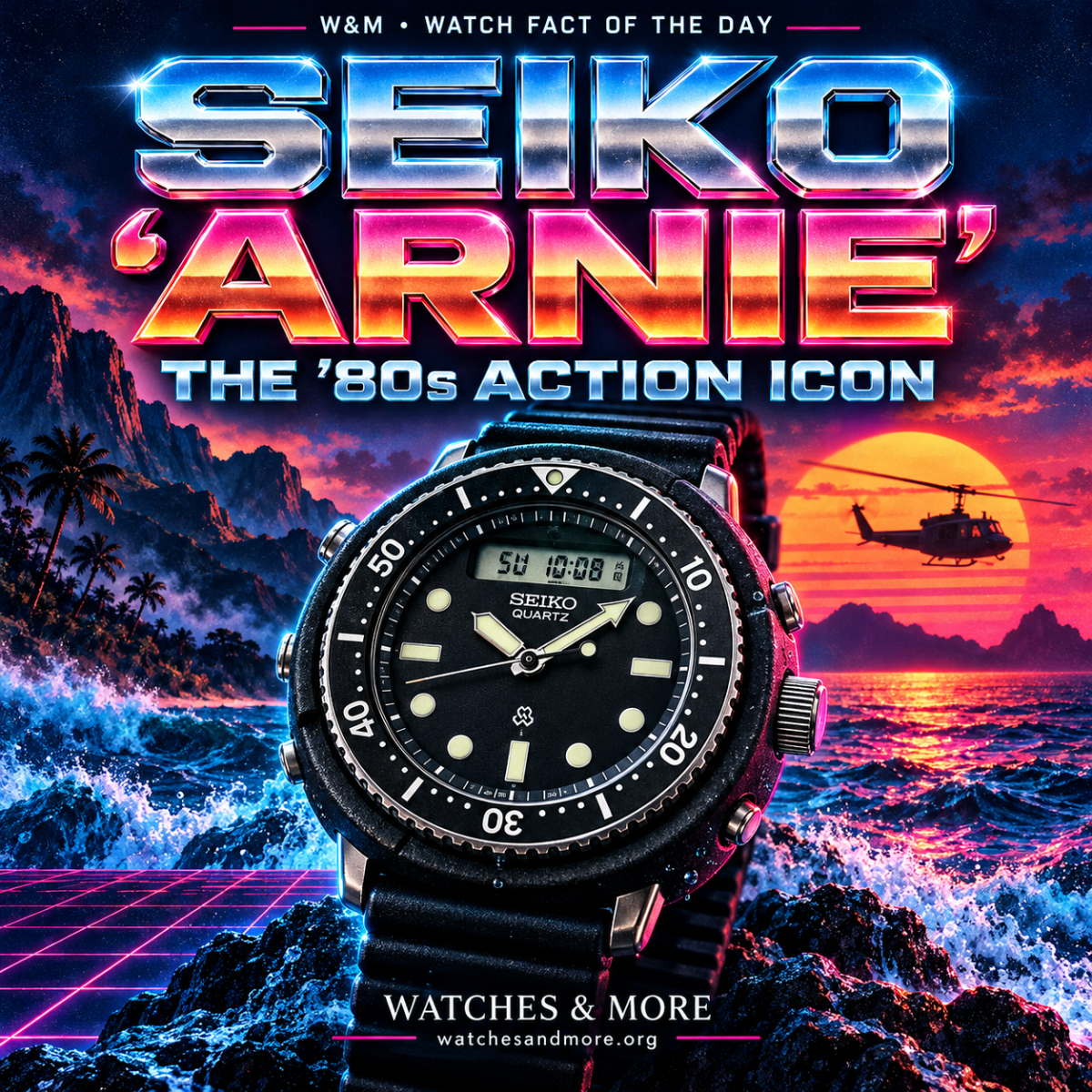
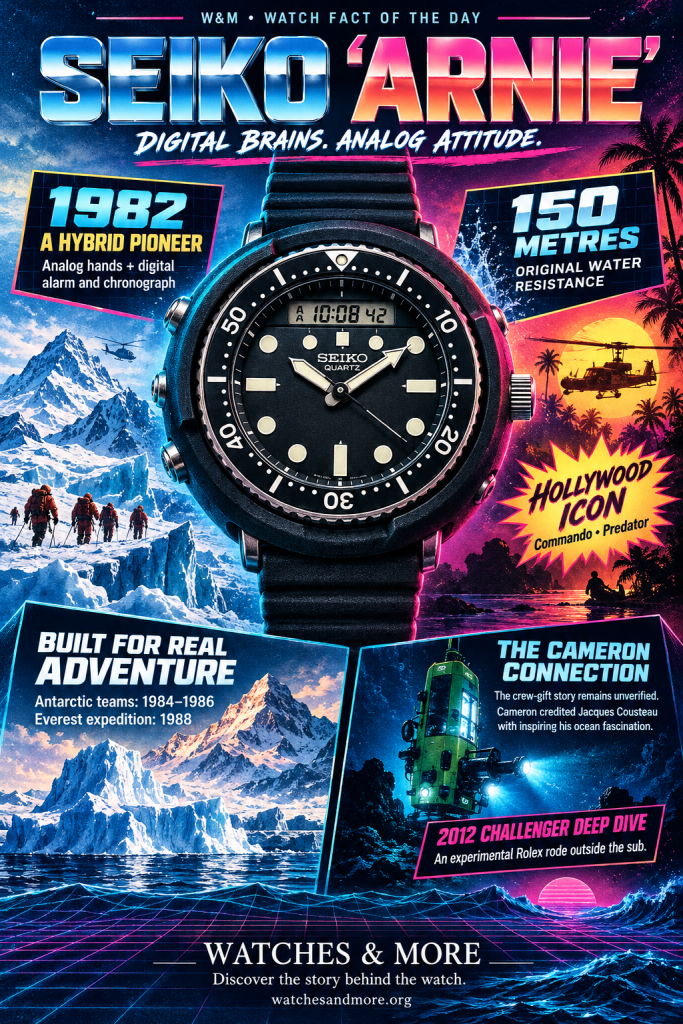
The Seiko H558, nicknamed the “Arnie,” is a legendary dive watch known for its bold design and hybrid tech that fuses analog and digital features. It gained fame thanks to Arnold Schwarzenegger in films like Commando and Predator but has its own serious adventure cred. Beyond Hollywood, it was part of many expeditions like Antarctic missions and the Everest climb in the late ’80s. While James Cameron’s connection is interesting, it’s not really verified; he’s more recognized for another Rolex during deep-sea dives. Overall, the H558 mixes cutting-edge style with rich history, making it a hot topic for watch fans.
📅 Sunday, October 18, 2026
An unmistakable eighties diver, a Hollywood connection, and a story that deserves a closer look.
Some watches seem born for adventure.
The Seiko H558 certainly looks the part: bold hands, a small digital window, and a chunky protective surround that gives it the presence of expedition equipment.
Collectors know it as the “Arnie.” Attach James Cameron’s name to it, and an intriguing tale emerges: a gift from the crew of The Abyss that supposedly helped ignite his deep-sea obsession.
It is a wonderful hook. But the documented history takes us somewhere different—and the watch has plenty of adventure credentials of its own.
🌊 Where Cameron’s Ocean Obsession Began
Long before The Abyss, Cameron was already fascinated by the underwater world.
In a 2012 interview with Eos, he credited Jacques Cousteau, his childhood in Canada, and learning to scuba dive at sixteen with setting him on that path. His exploration ambitions grew from those early experiences.
The claim that an H558-5009 gifted during The Abyss inspired that passion remains unverified. Eos
Fortunately, the Seiko’s own story needs very little embellishment.
🤖 A Diver With Two Personalities
Introduced in 1982, Seiko’s hybrid diver combined traditional analog hands with a digital display, an alarm, and a chronograph. Its original water-resistance rating was 150 metres.
Seiko describes it as the world’s first hybrid diver’s watch with both an alarm and chronograph.
There was thoughtful design behind that futuristic face, too: the LCD at twelve o’clock tilted upward to improve readability. Seiko Design 140
The combination had unmistakable appeal. Traditional hands gave it the familiar appearance of a dive watch, while digital functions delivered the technological excitement of the early eighties.
Part underwater instrument. Part science-fiction wrist gadget.
🎬 How It Became the “Arnie”
Arnold Schwarzenegger helped turn the H558 into a screen icon through appearances in Commando and Predator.
Seiko’s own UK boutique acknowledges the “Arnie” nickname and its Commando connection. HODINKEE’s examination of Predator identifies Schwarzenegger’s watch as an H558, probably an H558-5009—a useful qualification when discussing the exact reference. Seiko Official UK Online Store
The visual fit was perfect.
A large, purposeful watch. Camouflage. Helicopters. Eighties action-movie ambition.
Some watches disappear into a costume. This one became part of the character.
🧊 Real Expeditions Behind the Movie-Star Image
The hybrid diver’s adventures extended beyond film sets.
Seiko records its use by Japanese Antarctic wintering teams from 1984 to 1986, followed by the 1988 Japan–China–Nepal Everest expedition. Seiko Design 140
Those are substantial credentials for a watch often remembered first as an action-movie accessory.
Its distinctive appearance caught Hollywood’s eye, but its expedition history gives enthusiasts another reason to appreciate it.
🚢 What About Cameron’s Historic Deep Dive?
On 26 March 2012, Cameron made his historic solo descent to Challenger Deep aboard DEEPSEA CHALLENGER.
The experimental watch exposed to ocean pressure outside the submersible was a Rolex Deepsea Challenge, attached to its manipulator arm. Rolex documents its operation during the descent. Environment
There is no verified basis for presenting the Seiko as the inspiration or engineering benchmark for that mission.
The H558’s achievements and Cameron’s exploration career each offer compelling stories without requiring that connection.
💡 Did You Know?
The original hybrid diver placed its digital window at twelve o’clock.
On Seiko’s H855-powered 40th-anniversary reinterpretation, the larger display moved to six o’clock, alongside added functions including a diving log, depth measurement, and temperature measurement. Seiko Design 140
A small detail offers a quick clue when comparing generations.
⭐ Why It Matters
The Seiko H558 captures an exciting moment in watch design: electronic functions were expanding what a traditional tool watch could do.
Its appeal comes from that combination of useful technology, distinctive styling, expedition history, and cinematic personality.
For watch enthusiasts, that is more than enough reason to celebrate it.
Bold hands. Digital brains. Plenty of eighties attitude. ⌚🌊
Disclaimer: Every effort has been made to keep these watch facts accurate, but the world of horology is full of myths, disputed stories, and fascinating trivia. Consider these facts a starting point for discovery rather than the final word. If you have corrections or additional insights, let us know—we’re always happy to keep the record ticking in the right direction.
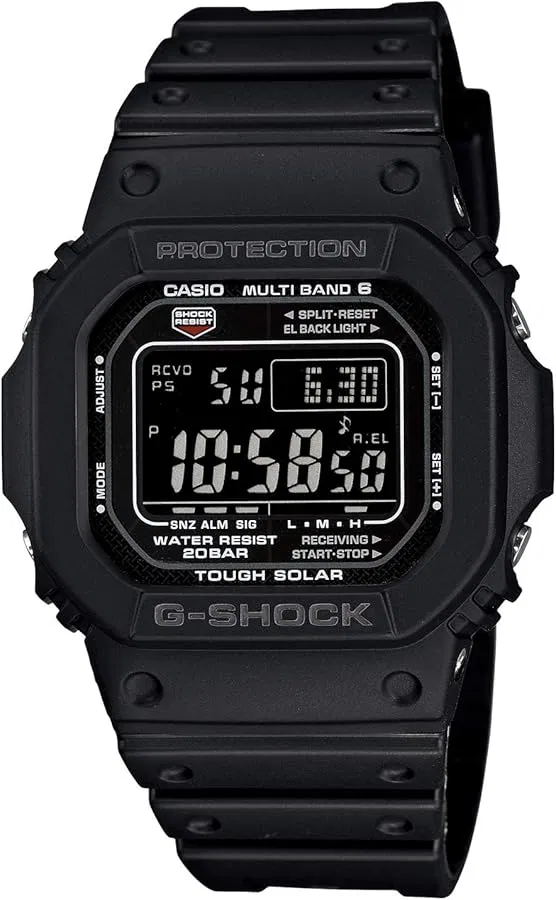
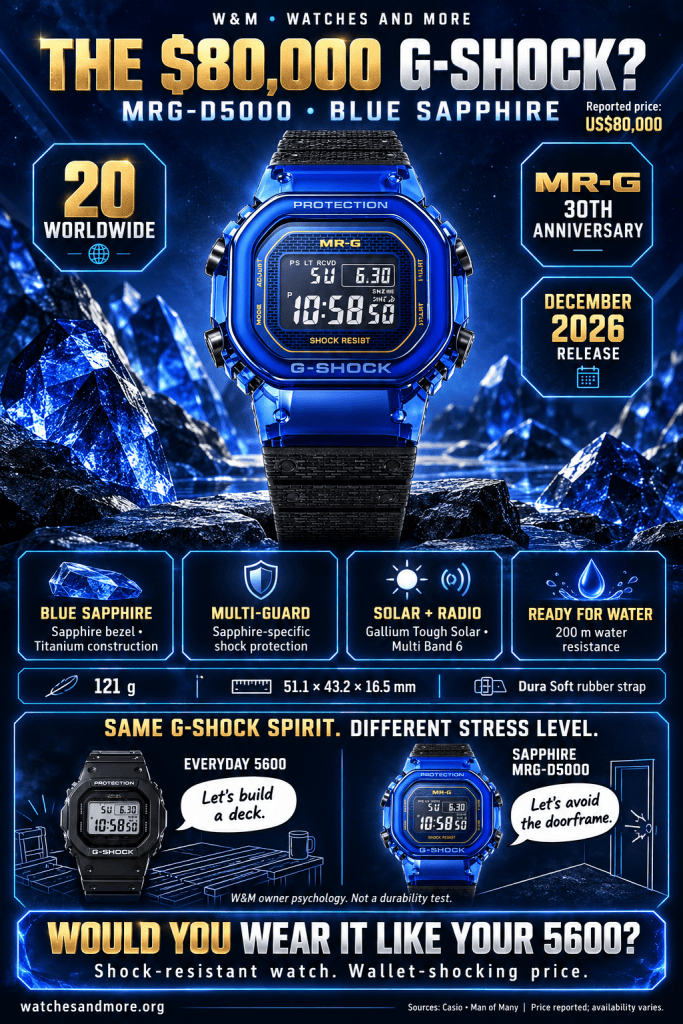
Introducing the Casio G-SHOCK MRG-D5000 Blue Sapphire, a fancy watch that costs a jaw-dropping $80,000—because why use a regular watch when you can have a sapphire-laden wrist trophy? With only 20 pieces worldwide, it’s likely to be worn by collectors who treat it more like a delicate flower than a rugged timekeeper. While your everyday G-SHOCK 5600 can survive life’s scrapes and knocks, this sapphire beauty might leave you sweating over just sitting on your wrist. So, will you wear it like a champ or keep it under glass like a museum exhibit? The struggle is real!
Twenty pieces worldwide. Blue sapphire construction. And one question: will anyone actually wear it like a G-SHOCK?
Some watches make you look twice.
The Casio G-SHOCK MRG-D5000 Blue Sapphire might make you check the price twice, clean your glasses, and check it again.
US$80,000.
Both WatchGuys and Man of Many report that figure for Casio’s extraordinary sapphire square. Man of Many reports six examples destined for the United States, with availability staggered from December 2026 into June 2027.
Meanwhile, somewhere out there, an everyday G-SHOCK 5600 is being knocked against a doorframe by someone who hasn’t thought about their watch since breakfast.
Both belong to the G-SHOCK family.
One shrugs off your day. The other might require you to sit down before reading the receipt.
💙 The Blue Is More Than a Colour
Casio announced the MRG-D5000 on October 1, 2026, confirming a worldwide edition of just 20 watches.
Its bezel is formed entirely from blue sapphire crystal, with sapphire components incorporated into a specially engineered shock-resistant case structure. Blue sapphire also appears in the screw-lock caseback.
This goes considerably beyond putting sapphire over the display.
It turns a material associated with clarity and luxury into a central part of the construction.
At a glance, someone unfamiliar with watches might mistake that translucent blue exterior for resin.
Imagine explaining that at a barbecue.
“Nice watch. My nephew has one.”
“Lovely. Does his come with a financial adviser?”
🔧 Making Sapphire Work the G-SHOCK Way
Hardness and impact resistance are different qualities. Resisting scratches does not automatically make a material forgiving of a sharp blow.
Casio’s answer is Multi-Guard Structure for Sapphire.
The design uses separate components and avoids screws in the sapphire assembly, removing features that could encourage cracking. Casio analysed how impact forces reach the material and developed the structure around protecting it.
That is serious engineering.
Whether an owner will feel comfortable putting it to the test is another matter.
The watch may be shock-resistant. Your reaction to dropping it may be considerably less controlled.
🆚 Everyday 5600 vs. Sapphire Showpiece
The familiar resin G-SHOCK 5600 represents a wonderfully straightforward ownership experience: put it on and get on with things.
The MRG-D5000 invites a rather different internal conversation.
The following comparison is W&M humour, rather than a specification test.
Everyday G-SHOCK 5600
MRG-D5000 Blue Sapphire
“I’ll wear it while moving furniture.”
“Let’s hire movers.”
Knocks the doorframe. Keeps walking.
Knocks the doorframe. Checks breathing.
Gets left on the bedside table.
Gets its own accommodation.
Someone asks the price. You tell them.
Someone asks the price. You check who’s listening.
An everyday companion.
An everyday conversation with your insurance provider.
The disparity is part of what makes this release fascinating.
Casio has taken a shape associated with practical, approachable toughness and carried it into extraordinary collector territory.
But will anyone treat this sapphire masterpiece with the same carefree familiarity as a regular 5600?
🌹 Eight Years to Make the Dream Work
Casio’s account places its sapphire concept in Basel in 2018. It could not yet meet the required performance standards.
Development continued. The multi-component approach appeared in the titanium MRG-B5000 in 2022, before the sapphire ambition reached production form in 2026.
The Blue Rose Project name reflects the pursuit of something seemingly impossible. Its construction draws inspiration from traditional Japanese timber-frame joints.
Years of persistence deserve recognition.
Even if the finished watch costs enough to make your existing Casio collection look suspiciously sensible.
📋 What Does Your US$80,000 Get You?
Casio lists the MRG-D5000 for December 2026, with these official specifications.
Feature
Specification
Dimensions
51.1 × 43.2 × 16.5 mm
Weight
121 g
Case and bezel materials
Titanium and sapphire crystal
Strap
Dura Soft rubber
Clasp
One-touch three-fold clasp
Water resistance
200 metres
Power
Gallium Tough Solar
Time adjustment
Multi Band 6 radio-controlled
Front crystal
Sapphire with anti-reflective coating
Titanium treatment
DLC
Accuracy without calibration
±15 seconds per month
You also get world time, a stopwatch, countdown timer, five daily alarms, and an LED backlight.
Yes, you can use an US$80,000 watch to time your frozen pizza.
Whether that improves the pizza remains unconfirmed.
✨ The Details Reward a Closer Look
The face retains the familiar brick motif, finished in blue vapour deposition. Casio specifies pure 24k gold for the MR-G mark and selected lettering.
The textured Dura Soft strap echoes that pattern, while individually numbered casebacks carry the DREAM PROJECT inscription.
These details give it an identity beyond “expensive square watch.”
Although “expensive square watch” will probably remain the family’s preferred description.
💡 Did You Know?
The “D” in MRG-D5000 pays tribute to the Dream Project.
Casio says its sapphire ingots take several months to produce, after which suitable sections are selected for colour and transparency.
Even the raw material requires patience.
Which gives you time to practise saying, “It’s an engineering achievement,” when someone asks why it costs that much.
💰 Collector’s Piece or Investment?
The reported price is US$80,000, not Canadian dollars.
WatchGuys offers resale forecasts, but those are dealer estimates. Its coverage states that the secondary market was not yet established.
Admire it, collect it, or debate it—but rarity alone does not guarantee appreciation.
Buying it because you love the engineering is one thing. Buying it because you assume the next person will pay more is a much less relaxing hobby.
⭐ Why It Matters
This watch broadens the conversation about luxury.
Its fascination comes from materials, manufacturing, and construction around a digital module. Those achievements deserve attention alongside traditional mechanical craftsmanship.
The price also exposes an entertaining tension.
A large part of G-SHOCK’s appeal is freedom from worry. You wear it and forget about it.
Can a watch retain that emotional freedom when its price makes you afraid to forget where you put it?
❤️ The W&M Take: Tough Enough to Wear—Expensive Enough to Hesitate?
I admire the ambition. I’d love to examine one up close.
I’d also be extremely aware of every table edge in the room.
Perhaps some owners will wear theirs everywhere, enjoying the engineering exactly as intended. Others may reserve it for special occasions and spend considerably more time looking at it than checking the time.
My everyday 5600 would probably watch all this from the workbench and wonder what the fuss was about.
The MRG-D5000 pushes G-SHOCK construction into remarkable territory. The humble 5600 still makes a very strong argument for getting on with your day.
And that leaves our question:
If you owned the sapphire G-SHOCK, would you wear it like your regular 5600—or would your toughest watch become the one you worried about most?
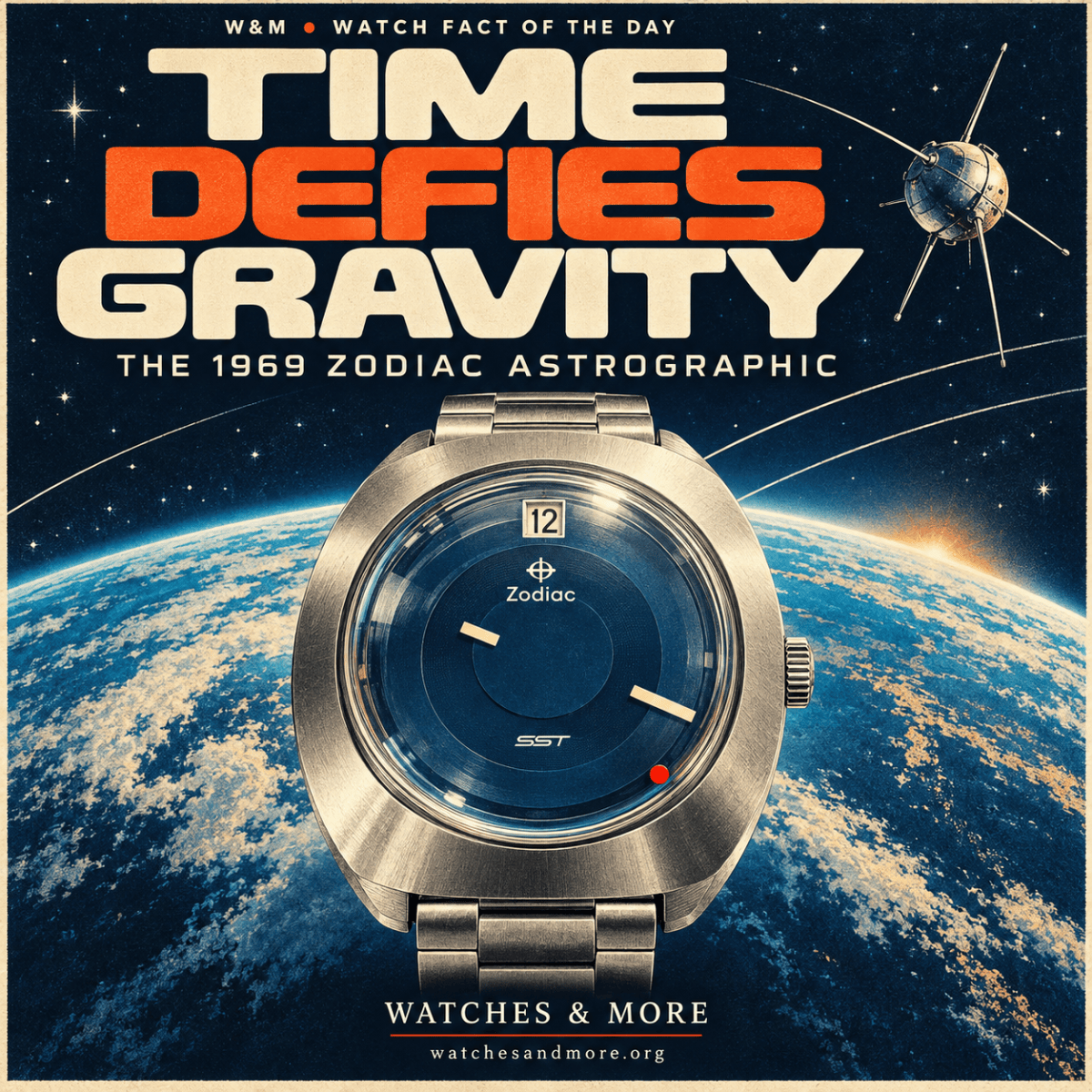
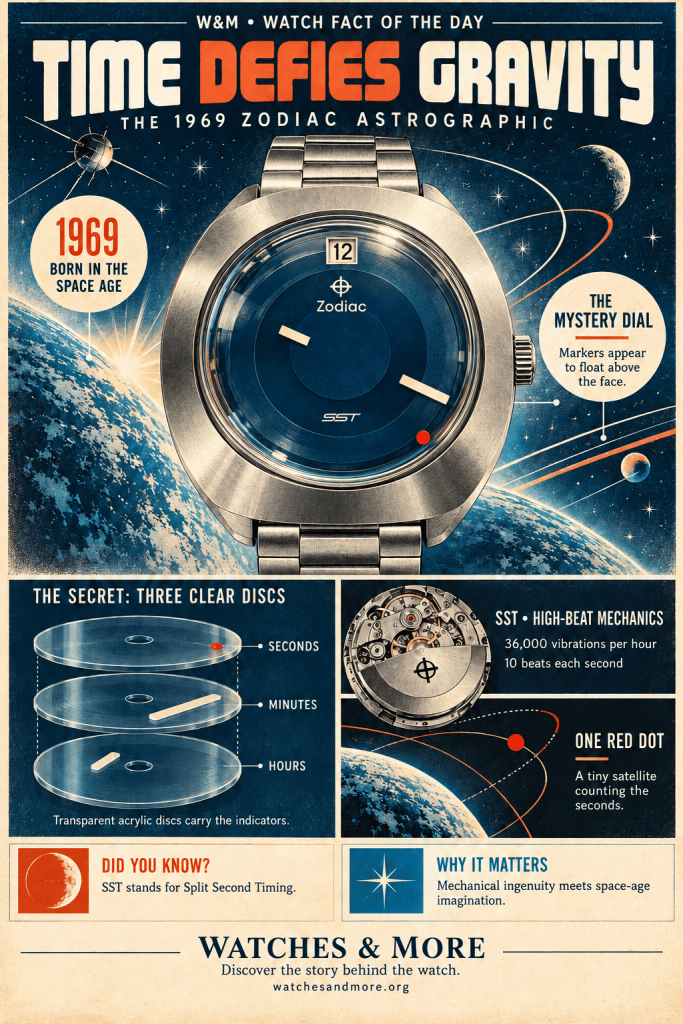
Introducing the Zodiac Astrographic—your wrist’s new space companion! This quirky timepiece ditched traditional hands for a floating display that makes telling time feel like watching a tiny UFO zoom past. Unveiled in 1969 during the cosmic craze of the moon landing, it cleverly employs transparent discs to create the illusion of weightlessness. With a speedy heart beating at 36,000 vibrations per hour, it promises impeccable timing and a little theatrical flair. Forget about just knowing whether you’re late—this watch invites you to ponder the mysteries of the universe, or at least why you haven’t had breakfast yet!
📅 Saturday, October 17, 2026
Meet the Zodiac Astrographic—the mechanical watch that put a little orbit on your wrist.
Imagine looking down at your watch and finding something missing.
The hands are there. They are moving. But the familiar arms connecting them to the centre have vanished.
Meanwhile, a tiny red dot travels around the dial like a satellite on a mission.
Welcome to the Zodiac Astrographic, a watch that made telling the time feel like peering into the future.
Watch Fact of the Day: The 1969 Space-Age Watch That Made Hands Float in Midair
🚀 Born When the Future Looked Like Space
Zodiac introduced the Astrographic in 1969, the year of the Apollo 11 Moon landing. Its floating display and unconventional case design reflected the space-age optimism of the moment.
Zodiac’s parent company, Fossil Group, explicitly connects the original design with the excitement surrounding space exploration. This was a watch intended to look forward. Fossil Group
Its appeal is easy to understand: why settle for ordinary hands when your wrist could host something resembling a miniature orbital system?
🪄 The Secret Behind the Floating Hands
The mystery was an ingenious optical illusion.
Rather than conventional hands extending from a visible central attachment, the vintage Astrographic used three stacked transparent acrylic discs, carrying the hour indicator, minute indicator, and red seconds dot.
The movement rotated the discs. Their transparency made the indicators appear unsupported above the dial. For the original vintage model, acrylic is the supported description; sapphire should not be assumed. fratellowatches.com
Think of three clear records turning at different speeds, each carrying just one visible mark. You notice the marks; the surfaces supporting them largely disappear.
The mechanics remained connected. The design made those connections hard to see.
🔴 A Little Red Satellite
The red seconds dot supplied the finishing touch.
Zodiac describes the original as having a small red moon orbiting the dial. Against the floating hour and minute indicators, that simple dot gave the display a personality all its own. Zodiac Watches®
You could read the time—or spend a moment watching your own tiny celestial performance.
No actual weightlessness required.
⚙️ A Fast-Beat Heart Beneath the Illusion
The Astrographic SST paired its unusual display with high-beat mechanical watchmaking.
The vintage calibre 88D examined by Fratello runs at 36,000 vibrations per hour, equivalent to 5 Hz: five complete balance oscillations, or ten beats, each second.
That produces small, frequent advances of the red dot, giving its journey a smooth-looking flow.
SST stands for “Split Second Timing.” It is Zodiac’s designation here, rather than a claim that the watch contains a split-seconds chronograph. fratellowatches.com
🛸 A Different Way to Imagine a Watch
What makes the Astrographic memorable is the way the whole idea works together.
The name suggests the heavens. The display resembles orbiting objects. The case gives the illusion a suitably futuristic home.
It invites you to stop thinking about hands and start thinking about motion.
That is a remarkable achievement for something whose everyday job is still simply to tell you whether you are late.
💡 Did You Know?
For its 50th anniversary, Zodiac revisited the Astrographic with a limited edition inspired by Mars.
The red-dot seconds indicator fitted that theme beautifully: the original’s little orbiting moon could now evoke the Red Planet. Fossil Group
Half a century later, the space-age idea still had somewhere to go.
⭐ Why It Matters
The Astrographic shows how a watch can create wonder through the way it presents familiar information.
Hours, minutes, and seconds are ordinary. Making them appear to drift independently transforms the experience.
Its lasting appeal comes from that playful meeting of engineering and imagination.
Some watches tell you the time. This one makes time look like it has escaped gravity. 🔴🚀⌚
Disclaimer: Every effort has been made to keep these watch facts accurate, but the world of horology is full of myths, disputed stories, and fascinating trivia. Consider these facts a starting point for discovery rather than the final word. If you have corrections or additional insights, let us know—we’re always happy to keep the record ticking in the right direction.
In 1935, a clever Swiss manufacturer introduced the Niagara watch, which ingeniously doubled as a miniature electric flashlight. The case contained a tiny batte
📅 Friday, October 16, 2026
In 1935, a clever Swiss manufacturer introduced the Niagara watch, which ingeniously doubled as a miniature electric flashlight. The case contained a tiny battery-powered bulb that illuminated the dial from within when activated by a side pusher. It was an eccentric solution for night-time visibility long before tritium and modern luminescent paints became standard.
Category: Fun Quirk
Disclaimer: Every effort has been made to keep these watch facts accurate, but the world of horology is full of myths, disputed stories, and fascinating trivia. Consider these facts a starting point for discovery rather than the final word. If you have corrections or additional insights, let us know—we’re always happy to keep the record ticking in the right direction.
Unveiled in 2015 by Vacheron Constantin, the Reference 57260 pocket watch features an astonishing 57 distinct complications and took eight years to design and b
📅 Thursday, October 15, 2026
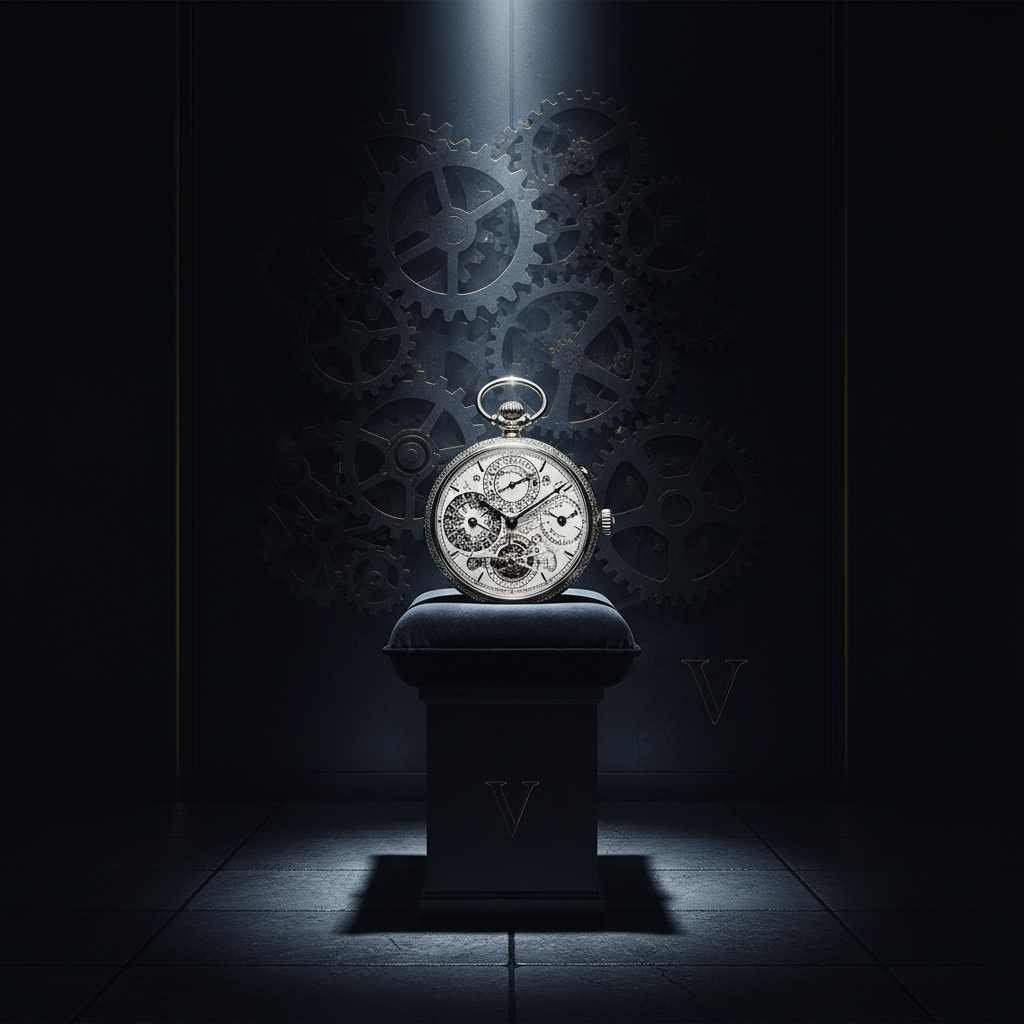
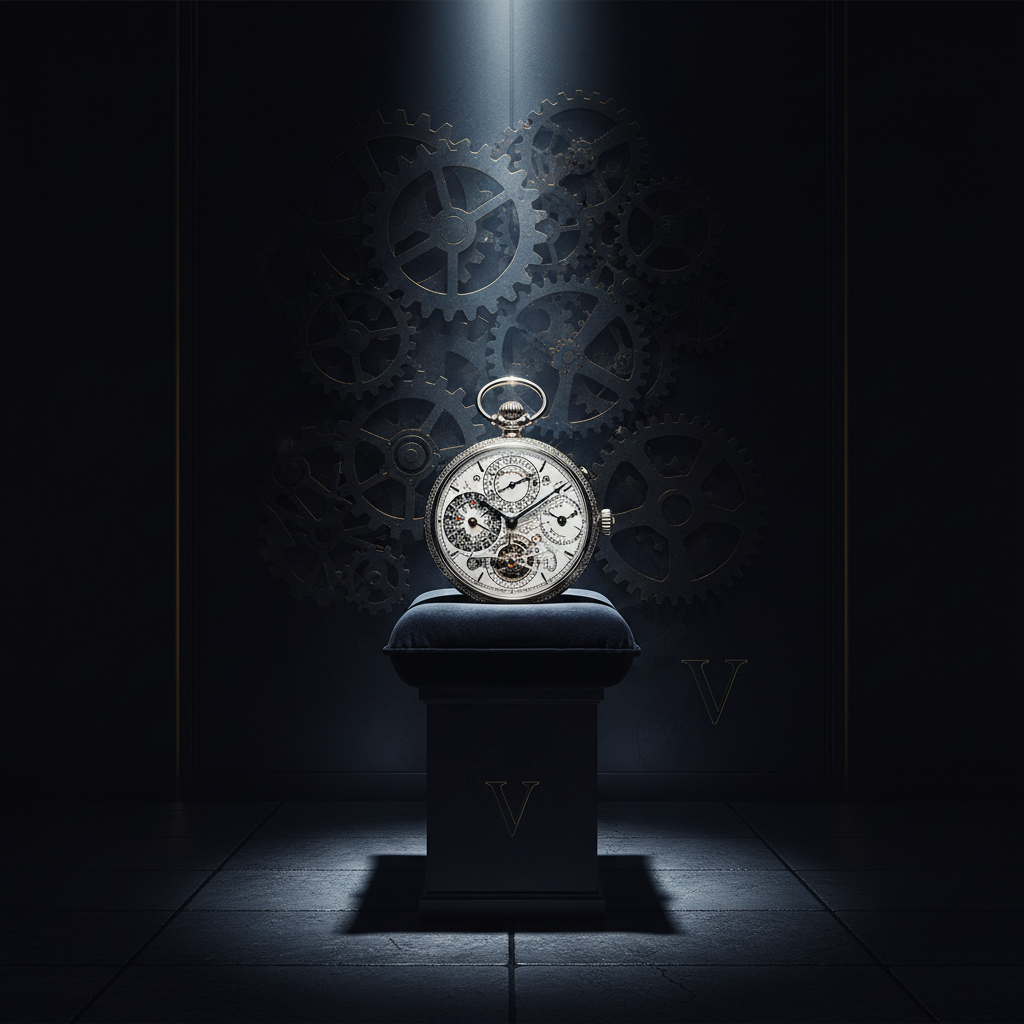
Unveiled in 2015 by Vacheron Constantin, the Reference 57260 pocket watch features an astonishing 57 distinct complications and took eight years to design and build. Among its most groundbreaking innovations is a fully mechanical Hebrew perpetual calendar, which required entirely new mathematical formulas to synchronize complex lunar and solar cycles. Weighing nearly a kilogram, this bespoke marvel stands as the most complicated mechanical watch ever created.
Category: Record Breaker
Disclaimer: Every effort has been made to keep these watch facts accurate, but the world of horology is full of myths, disputed stories, and fascinating trivia. Consider these facts a starting point for discovery rather than the final word. If you have corrections or additional insights, let us know—we’re always happy to keep the record ticking in the right direction.
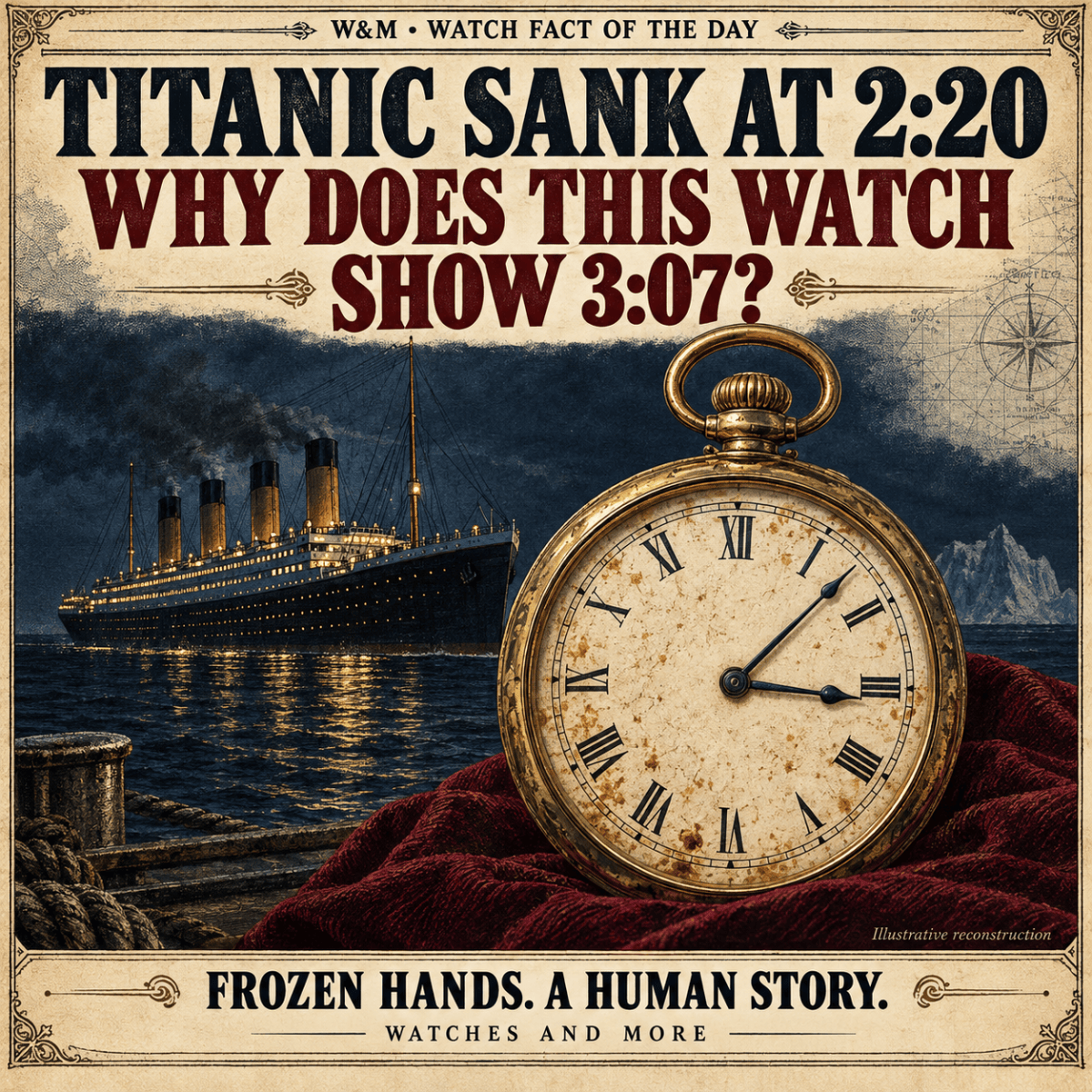
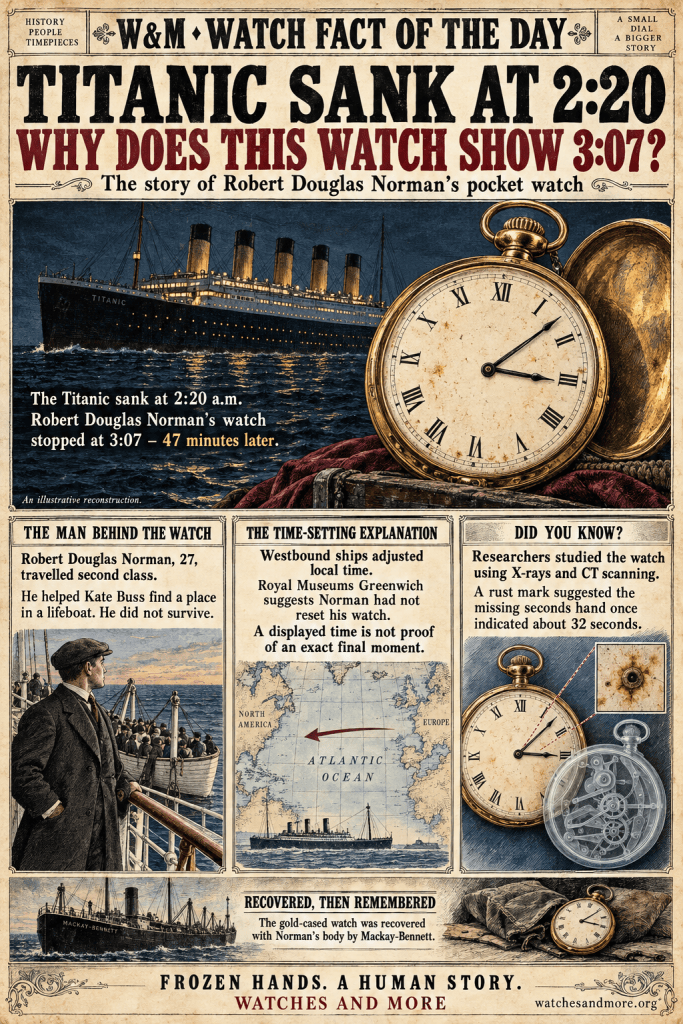
The story of Robert Douglas Norman, a Titanic passenger, shines a light on the personal narratives often lost in history’s grand scale. His gold pocket watch, recovered after the tragedy, stopped at 3:07, raising questions about its time-setting amidst the ship’s sinking. Although Norman did not survive, his heroic actions in helping a fellow passenger find safety are highlighted through this object, symbolizing the humanity behind a historical event. The watch serves as a poignant reminder that every timepiece carries a story, bridging the past and present, making the memory of Norman and his journey feel timeless and significant.
Frozen hands. A puzzling time. And a human story behind one of Titanic’s most poignant surviving objects.
Titanic disappeared beneath the Atlantic at approximately 2:20 a.m. on April 15, 1912.
Yet a pocket watch recovered from one of its passengers shows 3:07.
Forty-seven minutes later.
Was the watch wrong? Had it continued running after the ship sank? Or was something else behind those motionless hands?
The explanation offered by Royal Museums Greenwich concerns an easily overlooked part of ocean travel: the time passengers set on their watches.
But before we explore the mystery, we should meet the man who carried it.
🧳 A Journey That Never Reached Its Destination
Robert Douglas Norman was 27, travelling aboard Titanic as a second-class passenger.
He was heading to Vancouver to visit his brother, with plans for further travel. Like so many aboard the liner, he had a destination, people waiting for him, and a future beyond the voyage.
His gold-cased pocket watch was one of the personal belongings that would eventually help preserve his story.
Today, its significance reaches far beyond its value as a timepiece.
🚢 A Place in a Lifeboat
According to Royal Museums Greenwich, Norman helped fellow passenger Kate Buss find a place in a lifeboat. He remained aboard and did not survive.
When the recovery vessel Mackay-Bennett later recovered his body, the watch was found among his clothing. Its rusted hands showed seven minutes past three.
That is what makes this object so affecting.
It connects a familiar historical event with one individual—and an act of assistance during a terrible night.
🕰️ Why 3:07 Doesn’t Match 2:20
A passenger’s watch was only as closely aligned with ship time as its setting allowed.
On a westbound Atlantic crossing, clocks were adjusted as the ship moved toward a different local time. Passengers needed to adjust their own watches accordingly.
Royal Museums Greenwich explains that Norman apparently had not reset his watch to the ship’s latest local time. Its displayed time therefore should not be read as directly equivalent to the recorded sinking time.
The important word is “apparently.” This is the museum’s explanation, rather than something the watch can independently prove.
The hands preserve a reading—not an automatically synchronised timestamp.
🔬 What Can a Stopped Watch Really Tell Us?
A recovered watch is physical evidence, but interpreting it requires care.
Was it running immediately before entering the water? How accurately was it set? How quickly did water stop the movement?
Horology curator Rory McEvoy explored these questions in a study of Norman’s watch using X-ray imaging and computed tomography, or CT. He described the 3:07 reading as intriguing and considered it probable that the unwaterproofed watch would have stopped within a minute of immersion.
That makes the frozen hands compelling evidence to investigate, rather than a precise record of Norman’s final moment.
Sometimes, the most fascinating watch story begins with asking what we can—and cannot—learn from the dial.
💡 Did You Know?
Researchers found a trace of a missing seconds hand.
McEvoy’s study reports that the watch’s seconds hand had deteriorated completely. However, a mark left in the rust on the dial suggested it had indicated approximately 32 seconds when it stopped.
Even a component that no longer survives can leave evidence behind.
⭐ Why It Matters
Titanic’s story is often told through the scale of the ship and the magnitude of the disaster.
A personal object brings that history closer.
Norman’s watch reminds us that the passengers were individuals carrying ordinary possessions toward extraordinary changes in their lives.
Its stopped hands invite a question about time. Its ownership asks us to remember a person.
That is where this watch’s deepest significance lies.
❤️ The W&M Take: More Than Frozen Hands
At Watches And More, we believe every watch has a story.
This one holds a particularly moving connection between an everyday object, an interrupted journey, and a passenger remembered for helping someone else reach a lifeboat.
The difference between 2:20 and 3:07 draws us into the investigation.
Robert Douglas Norman gives us a reason to remember it.
The watch stopped. Its power to tell his story did not.
⌚ Explore more stories behind remarkable timepieces:
Picture this: you’re in the 1800s, stepping off a train, only to find that your pocket watch and the town clock are about to start a heated debate over what time it really is. Enter the genius Vulliamy watch with two minute hands! One hand proudly displays Greenwich Mean Time, while the other hand helplessly asks, “What time do you think it is, folks?” This quirky timepiece was the ultimate travel companion, helping bewildered adventurers juggle different local times like a circus performer. Who knew one watch could hold so much drama? Talk about a time-telling soap opera!
📅 Wednesday, October 14, 2026
Before time zones simplified travel, an extra minute hand helped travellers navigate a world of different local times.
Imagine stepping off a train, checking your pocket watch, and discovering that the town clock disagrees.
Your watch is running perfectly. So is the clock.
The problem? You have arrived somewhere with a different idea of what time it is.
In the nineteenth century, travel could mean negotiating a patchwork of local times. Watchmakers responded with ingenious ways to keep more than one time in view.
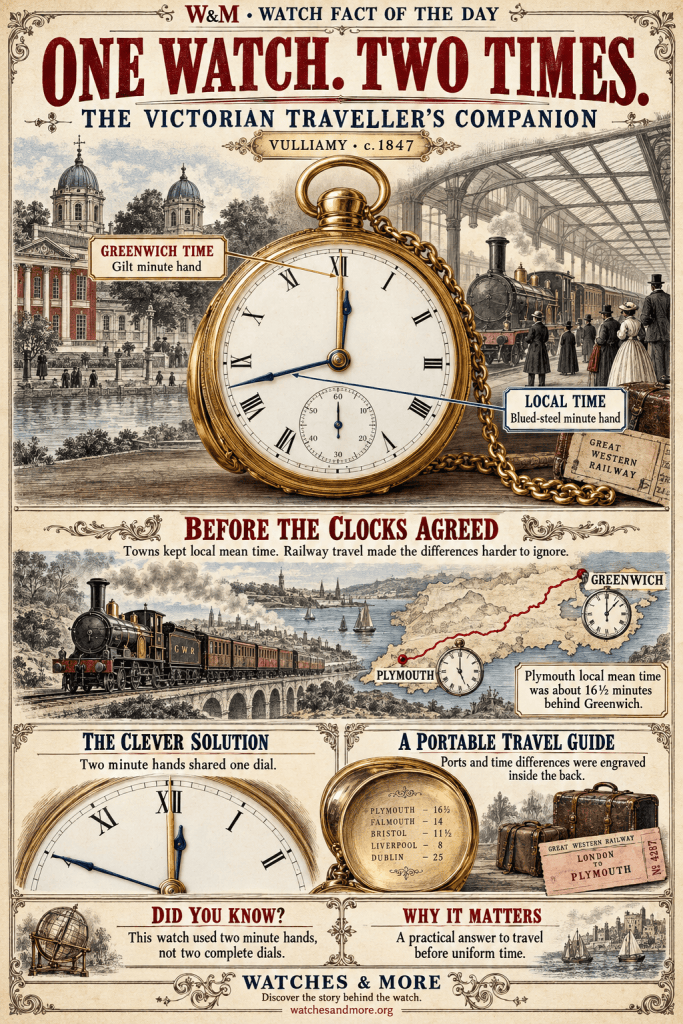
One surviving example makes the story especially tangible: a gold traveller’s watch by Vulliamy, dating to about 1847, now in the collection of Royal Museums Greenwich. Royal Museums Greenwich
☀️ When Time Belonged to the Town
Before uniform timekeeping became established, British communities used local mean time, linked to their longitude.
The difference between places might be measured in minutes, rather than the neat one-hour steps familiar from many modern time zones. Royal Museums Greenwich gives Plymouth as approximately 16½ minutes behind Greenwich.
Slow journeys made these differences manageable. Faster railway travel made them harder to ignore. rmg.co.uk
A timetable demands agreement. A collection of towns keeping different times makes that agreement considerably more complicated.
🚂 One Journey, More Than One Clock
For travellers, the challenge was practical: keep track of the reference time used for a journey while also knowing the time observed at the destination.
Picture a traveller asking two questions:
“What time does my train leave?”
“And what time does this town think it is?”
A watch that could show both offered a useful bridge between those two answers.
This is the fascinating setting for Vulliamy’s unusual pocket watch.
⌚ The Clever Part? Two Minute Hands
The museum’s example has an 18-carat-gold case, a Roman-numeral dial, and a small seconds display at six o’clock.
But its distinguishing feature is easy to miss: two minute hands sharing one main dial.
The museum identifies its purpose as displaying Greenwich Mean Time alongside another local time. Inside the back are engraved ports and their time differences—a compact travel reference built into the watch itself. Royal Museums Greenwich
This particular design is a reminder that early two-time watches did not all need two complete dials.
Sometimes, an extra hand told the story.
🧭 A Travel Companion Before the Modern GMT
It is tempting to call such a watch a Victorian GMT.
The comparison works as a way of understanding the need: travellers wanted a convenient reference to more than one place’s time.
But describing a specific nineteenth-century mechanism requires specific evidence. Two time displays alone do not establish that a watch has two independent movements or complete gear trains.
For this example, the documented feature is the additional minute hand.
That makes the design especially evocative: a small difference on the dial reveals a large difference in how people organised their lives.
🇨🇦 A Canadian Connection to Time Reform
Later in the century, Sir Sandford Fleming became closely associated with the campaign for worldwide standard time.
The Smithsonian records a watch belonging to Fleming, made by Nicole, Nielsen & Co. and ordered through London retailer E. White, that reflected both zoned and local time. National Museum of American History
It offers another tangible link between portable timekeeping and the effort to bring order to the world’s clocks.
💡 Did You Know?
On Vulliamy’s traveller’s watch, the gilt minute hand showed Greenwich time, while the steel minute hand could be set to the place being visited.
Colour helped the owner distinguish the two readings. rmg.co.uk
⭐ Why It Matters
This watch captures a problem that modern travellers rarely need to think about: the difference between keeping accurate time and agreeing on which time to use.
Its extra hand was more than an unusual detail. It made a complicated travel problem visible—and offered its owner a practical way to manage it.
One pocket watch. Two local times. A glimpse of the world before the clocks agreed. ⌚🚂🌍
Disclaimer: Every effort has been made to keep these watch facts accurate, but the world of horology is full of myths, disputed stories, and fascinating trivia. Consider these facts a starting point for discovery rather than the final word. If you have corrections or additional insights, let us know—we’re always happy to keep the record ticking in the right direction.